



.svg)


When customer demand peaks, it can feel like a double-edged sword: while high demand represents a massive opportunity, it can also pose a significant challenge for your team. If you’ve been at it a while, you already know that behind every surge is a team trying to keep up, often at the cost of morale, accuracy, and wellbeing.
As your business scales, you’re almost certain to run into some operational hiccups. But if you can identify and eliminate process gaps – and prepare your team to implement them –you’ll be well on your way to more manageable, predictable cycles (and a happier team).
Let’s dig into to uncover some practical methods for managing peak demand periods while keeping your team motivated and your operations running smoothly.
The 'growth trap'
While growth is exciting and profitable, growth without adequate systems and processes in place typically only leads to short-term success, rather than truly sustainable growth.
Every business faces unexpected customer demand at some point, but spikes in customer demand are more common for some businesses than others. It’s how businesses handle these spikes will determine their future success.
Just five years after a study of Fortune’s 5,000 fastest-growing companies, it was discovered that two-thirds had either shrunk, gone out of business or been sold. While these failed start-ups had successfully launched a product or service that met a genuine customer need (stage 1), grown a strong customer base and expanded operations (stage 2), many had failed to establish robust processes enabling them to scale and sustain the business as demand increased.
In fast-growing companies, this inability to take operations and systems to the next level leaves them unable to keep up and the business unravels. But while the rate of growth is still manageable, many businesses avoid making the structural, procedural and technological changes needed to reach maturity – and operating ‘on a knife’s edge’ becomes the norm.
Avoiding the trap
Issues for businesses with outdated systems and internal processes commonly show many of the same symptoms. Many Wiise customers reach that crucial third stage of growth, using the same processes and systems they’ve used since their first day of trading, before they realise that change is the only way the business can truly thrive.
Growth trap symptom 1: A frantic work environment
Fresh Frontier supplies fresh fruit, vegetables and ready meals to a wide range of customers – but with ‘fresh’ being key to its offering, speed is absolutely crucial.
Customer orders arrive from 7am each day and the goal is to get those orders inputted to the system, processed, prepared and shipped as quickly as possible.
Before implementing Wiise, getting orders prepared each day was chaotic. Still relying on paper forms and manual data entry, simply getting order data into Fresh Frontier’s small business software took several hours, leaving a more than four-hour delay between receiving orders and beginning production.
“I just wanted us to be a business that wasn’t frantic”, explains Fresh Frontier’s Managing Director, Michael Leen. “People would be constantly running around with pieces of paper in their hands, trying to find the right information. If a mistake was made, we wouldn’t know at what point it had happened.”
Growth trap symptom 2: Slow turnarounds and lost sales
 While Fresh Frontier felt the daily chaos of outdated processes, flooring manufacturer Terra Mater experienced a different, but equally common, consequence: slow turnaround times that directly impacted sales.
In just a few years, Terra Mater Floors grew from nothing to a 400+ customer business, with warehouses in Sydney, Melbourne and Brisbane, and staff in every state. Despite this growth, the business was still relying on multiple spreadsheets and a small business bookkeeping technology to process orders.
In addition to its fast growth, demand was often unpredictable, with 60% of customers expecting a 24-hour turnaround. “We were incredibly inefficient, making lots of mistakes – it was slow, manual and time-consuming”, reveals David Temby, Operations Manager at Terra Mater. “We could just about manage a 72-hour turnaround, which often resulted in lost sales”.
What employee stress is really costing you
An environment where bottlenecks, mistakes, missed deadlines and disappointed customers are an everyday occurrence takes its toll.
Nearly 45% of employees report feeling stressed on a daily basis, with time pressure cited as one of the top causes. In warehousing, logistics, and supply chain businesses, where employees are often faced with tight deadlines, physically demanding work, and changing schedules, the risk of burnout is very real.
According to SafeWork Australia, 8% of all mental health claims last year came from workers in the transport and warehouse industry.
For the warehousing and distribution sectors, already struggling with skills shortages, neglecting employee well-being comes at a direct cost.
6 ways to reduce chaos during peak periods
With the right strategies in place, your business can maintain efficiency, prioritise team well-being and deliver exceptional service, even during your busiest periods.
-
Modernise and optimise your systems
There’s no way around it – technology is at the heart of your business. And i esting in software that is the right fit and functionality for your requirements is the crucial first step towards building a sustainable, scalable business. It will also arm staff with the tools they need to perform their jobs more easily, accurately and efficiently – a key factor in maintaining a happy workforce.
For warehousing, logistics and distribution businesses, key technologies to consider include:
- Enterprise Resource Planning (ERP): An ERP brings together data from every corner of your operations, including accounting, inventory, CRM and more, into one system, enabling you to maintain stock accuracy, predict and plan capacity to meet demand and manage your costs.
- Warehouse Management System (WMS): A WMS provides complete inventory management – enabling manufacturers to track the exact location and status of goods and materials from the moment they arrive in the warehouse through to transit and delivery.
- Barcode and RFID scanning: Barcodes, RFID and QR codes are some of the most common ways of identifying single items (product/component or batch) within the production process. Scanners automatically capture data, improving picking and packing accuracy, reducing manual errors and speeding up operations.
- Automated sorting systems: These reduce manual handling – especially for high-volume inventory-based businesses – as well as streamlining workflows and improving order accuracy.
- EDI (electronic data interchange): Automates the exchange of key business documents (think orders and invoices) between supply chain partners to reduce manual processing, while improving accuracy and efficiency.
-
Streamline your order fulfillment processes
When demand spikes, fast and efficient order processing plays a critical role in preventing bottlenecks. By automating order processing, Fresh Frontier was able to save more than four hours a dy and Terra Mater was able to meet 24-hour fulfilment requests.
Automating order processing also eliminates errors that can occur with manual data entry, which will also save time previously spent troubleshooting and making corrections. All of this speed takes pressure off your teams and frees them up to focus on more valuable tasks.
-
Be (accurately) prepared
With the help of accurate forecasting, unexpected surges in demand become the exception, not the rule. Forecasting enables businesses to anticipate demand and adjust resources accordingly, minimising the risk of over- or under-stocking.
Forecasting demand previously required detailed analysis of historical business data – from finances and sales to the supply chain and or weather – to spot trends. Thankfully, modern business systems are increasingly offering advanced AI-powered analytical tools that can run detailed forecast reporting in seconds.
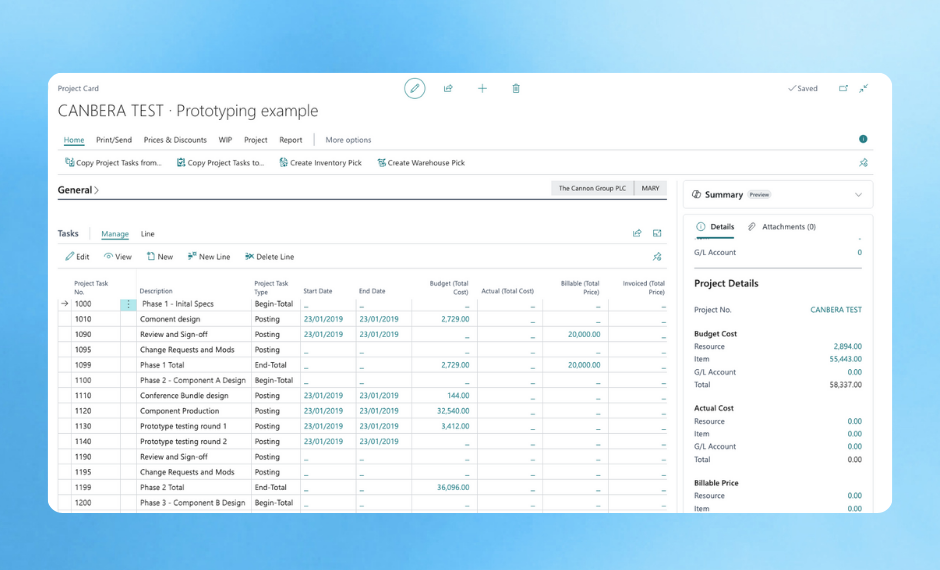
Inventory forecasting in the Wiise ERP
-
Optimise your warehouse itself
An efficient warehouse is essential for meeting higher order volumes. The good news? There are lots of ways to establish a fast-moving, low-error, stress-free warehouse environment.
- Connect your warehouse and office-based teams: Wiise Warehouse OnTime is a simple but powerful mobile app that enables warehouse staff to complete stocktakes, picks and put-aways, track all warehouse activity – and more – on any iOS, Android or major scanning device.
- Consider the best layout: Simple changes can make a big difference to movement and congestion on the warehouse floor, as well as creating a calmer environment. For example:
- Position high-demand items strategically: Placing best-sellers and frequently picked products close to packing and dispatch zones reduces travel time and staff movement.
- Implement zone picking: Assigning specific areas to teams reduces cross-warehouse travel.
- Create temporary adjustments: Reconfiguring your layout to accommodate faster-moving goods, and adding modular shelving or temporary storage areas, can provide greater flexibility to handle spikes in demand.
- Enhance labelling: Clear, consistent labelling (both visual markers and in digital systems) reduces errors and helps new staff navigate your warehouse quickly.
-
Augment your workforce with temporary staff
Being ready and willing to take on temporary staff during busy periods will take the pressure off your permanent teams – but finding skilled warehouse and logistics staff is often challenging, so preparation is key:
- Start recruitment early: Building a pool of reliable casual workers will prove helpful all year round, but you’ll be especially glad to have them when demand peaks.
- Set up a thorough onboarding process: Standardised, comprehensive training – such as video tutorials, checklists, shadowing and mentoring programs – will ensure that new staff can become confident, safe and productive, as quickly as possible.
- Monitor performance: New staff will potentially be less productive and more prone to mistakes, so regularly checking accuracy and tracking performance will help to identify and address issues quickly.
-
Support your teams directly
Staff stress and burnout often have a long recovery time and can jeopardise safety, productivity, staff churn and revenue. Your employees will reap the benefits of efficient operations and modern, intuitive systems, but there are additional ways to boost staff wellbeing:
- Balance rosters: Distribute workloads fairly and ensure staff have adequate rest periods. Consider rotating teams to share peak-time pressures.
- Offer regular breaks: Encourage teams to take scheduled breaks to maintain energy levels and focus.
- Recognition and rewards: Successfully delivering on large, last-minute orders or throughout peak periods should be celebrated as team win. Acknowledge exceptional effort with incentives, bonuses or even offering flexible work arrangements after peak periods.
- Provide health resources: Mental health in the workplace is becoming increasingly important issue. Organisations such as Healthy Heads in Trucks and Sheds and R U OK? offer useful online resources specifically tailored to workers in warehousing, distribution and logistics. Fostering a supportive work culture can have a huge impact on employee mental health, particularly during busy periods.
Peak demand doesn’t have to mean peak stress
Overtime, missed deliveries and angry customers should be a rarity in any business, even at its busiest. Implementing modern, digital systems and processes are critical steps towards reaching your business’s full potential, as well as enabling your staff to do their jobs calmly and efficiently.
Ready to take the stress off your teams? Wiise can help your business to scale, pre-empt customer demand and ramp up order fulfilment. Speak to one of our friendly team members to find out more today.
For further reading, explore more of our articles: