

PLATFORM COMPARISON

MYOB AccountRight vs Wiise: Which platform is right for your business? 

If you're evaluating MYOB AccountRight and Wiise, you're likely managing growing complexity — more data, more systems, and more pressure to report accurately and operate efficiently.

Both platforms support financial management, but take different approaches to how your data, operations and processes connect. Here, we break down the key differences. 
hero-product-frame

HAVE YOU OUTGROWN MYOB?

MYOB AccountRight is a strong fit for many
businesses — until operations grow

As operations grow, limitations start to appear, often in reporting, data flow and system complexity.
Businesses begin evaluating alternatives when:

Reporting depends on spreadsheets or manual consolidation.
Inventory, payroll, projects or operations sit across multiple systems
The business operates across multiple entities, locations or sites
Leadership needs operational reporting, not just financial summaries
Teams spend more time reconciling data than actually using it
Compliance, approvals and audit trails need tighter control

WIISE VS MYOB AT A GLANCE

The essential differences, side by side

 
MYOB AccountRight
wiise
System approach
Accounting platform with add-ons
Unified platform across finance and operations
Reporting
Financial reporting; deeper insights may need extra tools
Financial and operational data reporting in one system
Data structure
Multiple systems depending on setup
Single connected system
Scalability
Can get harder to manage as complexity grows
Built for multi-entity, multi-site environments
Operational coverage
Varies by product and configuration
Finance, inventory, projects and operations in one system

REPORTING + VISIBILITY

See performance across every location, project and program

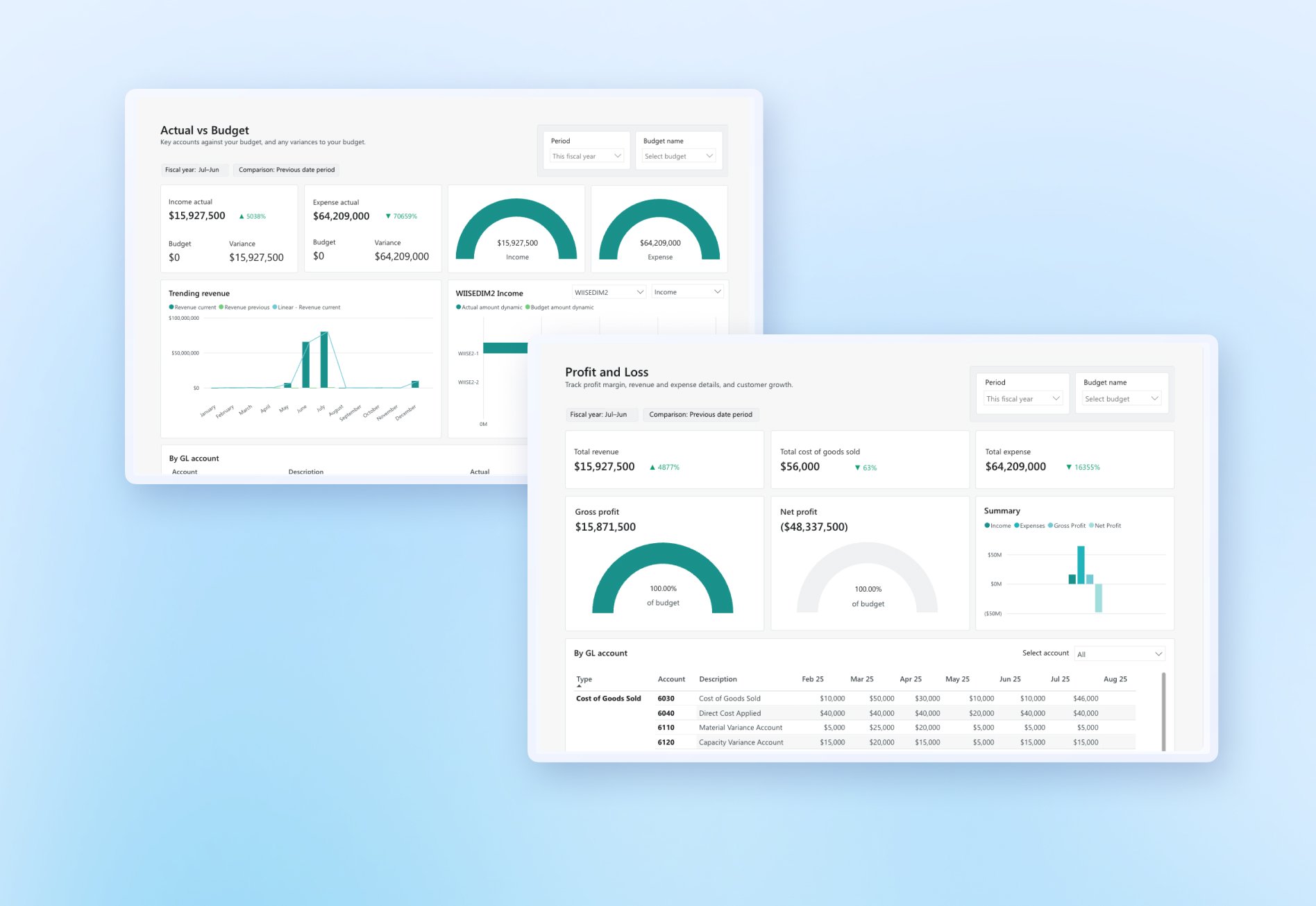
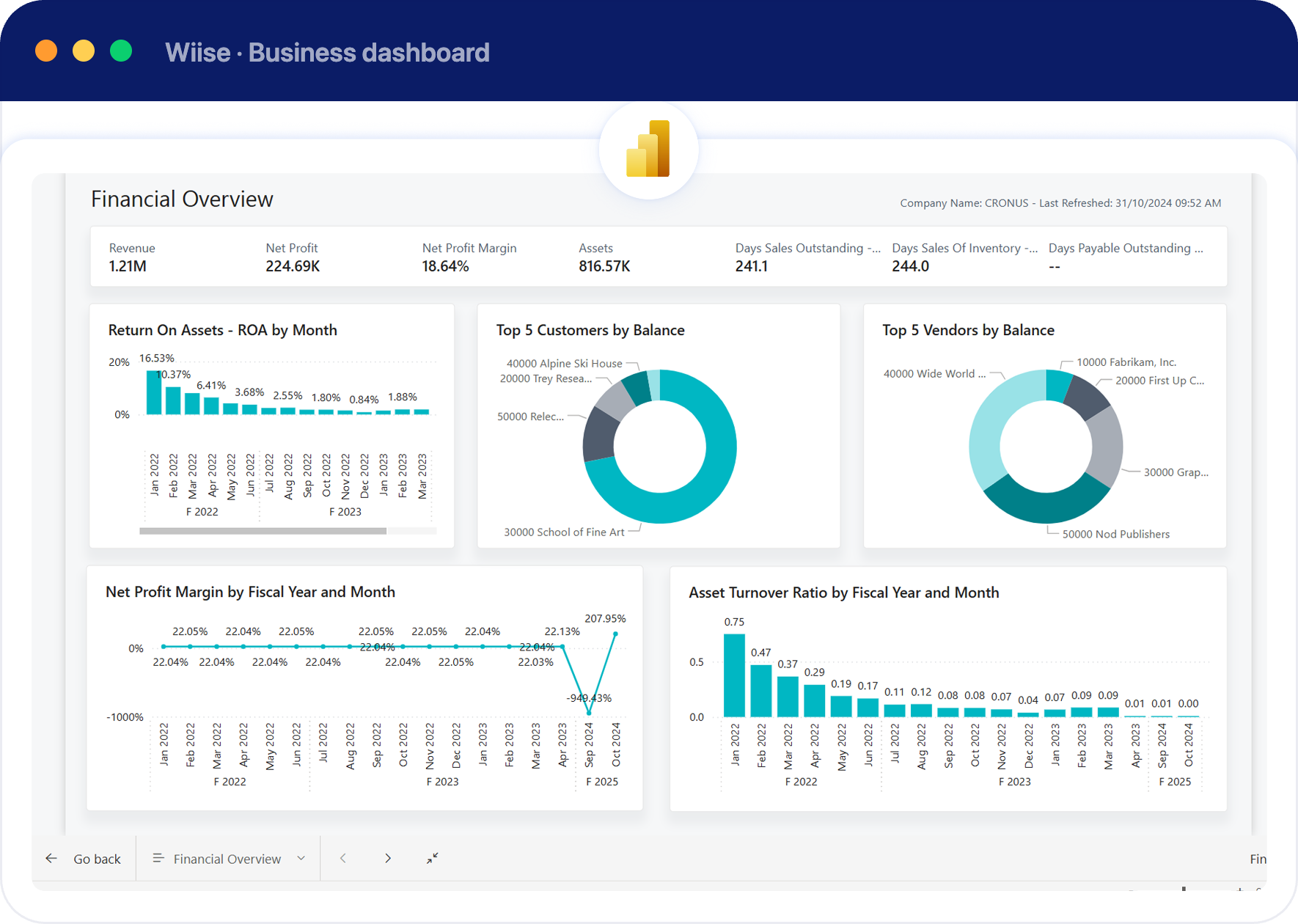
Accurate, detailed reporting matters more as businesses grow. Wiise extends beyond financial summaries into operational performance, while MYOB reporting often depends on additional tools as complexity increases.

Businesses moving to a connected reporting environment typically gain better visibility across locations and greater confidence in their numbers.

CapabilityMYOB AccountrightWiise
Financial reporting Yes Yes
Reporting across locations, projects or programs Limited, depending on setup Supported natively
Drill-down into operational data Requires extra tools or manual work Built into the platform
Access to real-time data Varies by configuration Across financial and operational data

CONFIDENCE IN THE NUMBERS

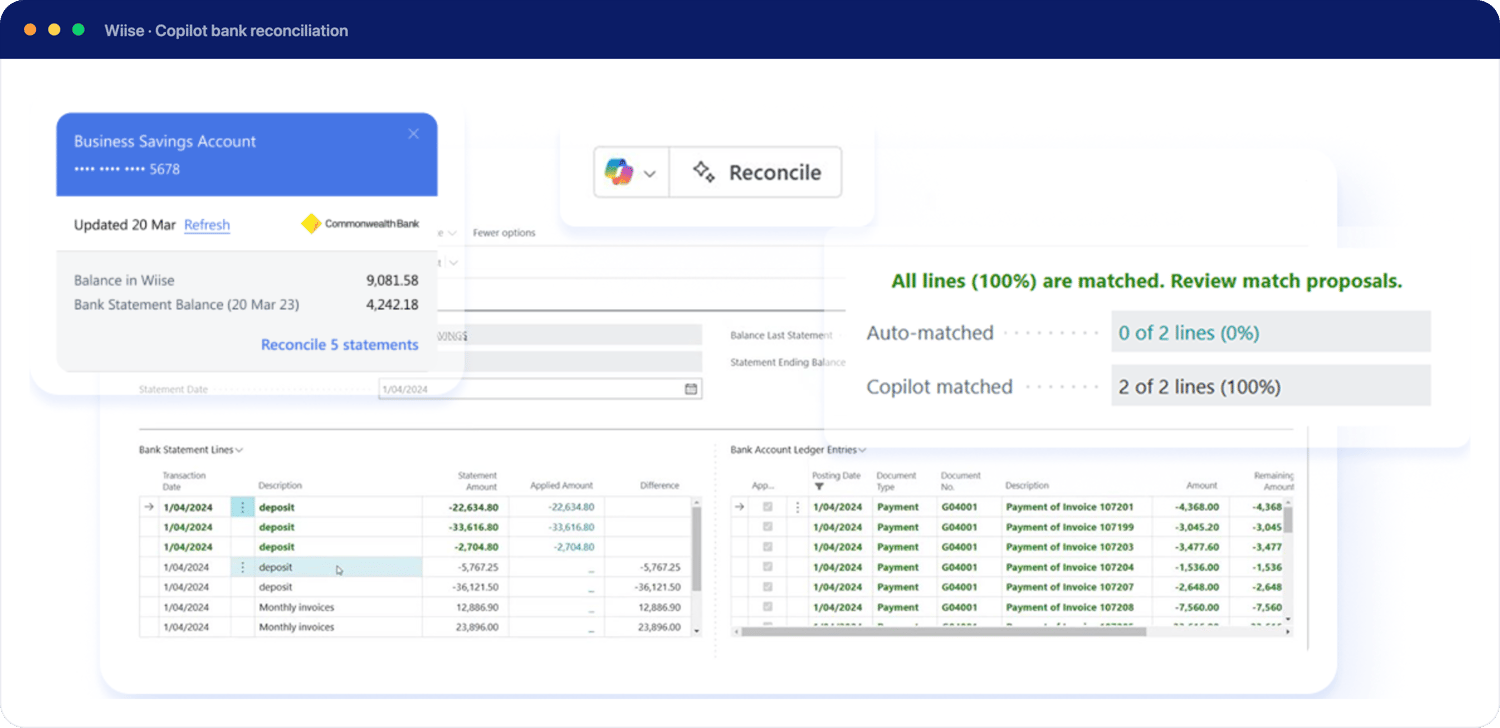
Copilot auto-matches bank statement lines against ledger entries, so reconciliation stays current and reporting reflects it in real time.

bank-recon-v2

PERFORMANCE AT SCALE

Will it still be fast when you're twice the size?


It's the question that decides most serious evaluations: as transaction volumes, users and entities grow, does the platform keep up or start to slow down? This is where a desktop-era accounting file and a cloud platform behave very differently.


MYOB

Performance is tied to the size of your file and setup. As data, history and users build up, businesses commonly report the software feeling slower — and hit practical limits well before they'd like to.

Wiise

Runs on Microsoft Dynamics 365 Business Central — cloud infrastructure built to scale with you. Growing your volumes doesn't mean growing a file on one machine, so speed holds up as the business gets bigger.

So how much can the system actually handle?
Here's a normal day on Wiise — anonymised production telemetry from Microsoft, across live Business Central businesses. Whether you're processing a hundred transactions a day or half a million, Wiise scales to match.
Journal lines
256,000
posted in a single day
Sales invoices
52,500
in a day — 2.6M lines
Sales orders
8,000
created in a single hour
And Microsoft is explicit: these are everyday figures, not the platform's limit. Source: Microsoft — Service scalability for Business Central online

SYSTEM STRUCTURE + DATA FLOW

How your systems are structured shapes how your data flows

As more systems are introduced, differences in data flow and reconciliation become more noticeable. Here's how the two approaches compare.

MYOB AccountRight
Connected add-ons & third-party systems
Accounting Inventory add-on Payroll system Reporting tool Spreadsheets
Data flow
Between multiple systems depending on setup
Integration
May rely on third-party connectors
Reconciliation
Often required between systems
 Wiise
One platform, one connected data model
Single connected system
Finance Inventory Projects Payroll Reporting
Data flow
Within one system
Integration
Native across the platform
Reconciliation
Reduced through a shared data model
One system animated

WHERE THEY DIVERGE
There's a right time for each platform

Managing complexity and growth

MYOB Accountright

Commonly used by businesses in earlier stages of growth. Functionality is often added through extensions as requirements increase — which can make systems harder to manage over time.

Wiise

Designed for businesses managing multiple entities, sites or workflows — with built-in support for inventory, job costing and operational processes in the same system.

Operational efficiency

MYOB Accountright

Processes may involve multiple systems, spreadsheets or manual reconciliation, depending on setup.

Wiise

Finance and operations run in one system, so teams work from a single source of data and cut manual effort. In practice, that means:

Labour costs flowing into project or job costing
Inventory, sales and finance teams working from the same data
Reporting available without consolidating across systems

Compliance & audit readiness

MYOB Accountright

Supports compliance requirements depending on configuration, though some processes may rely on manual work or external systems.

Wiise

Audit tracking and structured controls across financial data, with centralised reporting that simplifies audit preparation and reduces reliance on manual processes.

Technology and ecosystem

MYOB Accountright

An established platform in Australia with a range of extensions and third-party add-ons. Capabilities vary depending on product and environment.

Wiise

Built on Microsoft Dynamics 365 Business Central, with native integration into the tools your team already uses — a connected, cloud-based environment.

Excel Power BI Microsoft 365 Dynamics 365 Business Central

WHICH FITS YOUR BUSINESS?
There's a right time for each platform

When MYOB may still be a good fit

The business primarily needs accounting, payroll and basic inventory
Reporting requirements are mainly financial rather than operational
There are limited entities, locations or operational workflows
The organisation isn't yet ready for a broader ERP implementation

When businesses choose Wiise

Finance needs a single view across operations, inventory, projects and payroll
The business operates across multiple entities, locations or sites
Real-time reporting across the business is required
Manual reconciliation is slowing down reporting and decisions

HOW TO CHOOSE
Match the platform to your complexity

The right choice depends on how much operational complexity, reporting depth and system integration you need today — and expect in the future.


Scenario MYOB Accountright Wiise
Simpler financial management needs Yes
Multiple entities or locations Depends on setup
Inventory or operational complexity May need extensions
Consolidated reporting across the business Limited in some cases
Integrated finance and operations Depends on config

MOVING FROM MYOB

Migration is usually the biggest concern — so let's talk it through

Complexity varies by environment. Most businesses evaluate a change when maintaining multiple systems costs more effort than moving to a connected platform.


1 Which MYOB product and version is currently in use
2 What data needs to move — customers, suppliers, inventory, transactions
3 Which systems are connected today, and how they will be replaced or integrated
4 Whether processes should be replicated or redesigned
5 How reporting, approvals and controls will work in the new system

SEE HOW WIISE WORKS

Manage reporting, operations and
growth in asingle connected system

Explore how businesses are using Wiise to bring finance
and operations together.

  •  

FAQs

What is the difference between Wiise and MYOB AccountRight?

MYOB AccountRight is built for accounting: invoicing, payroll and financial reporting. For inventory, job costing, or multi-entity reporting, most businesses add third-party apps on top.

Wiise is an ERP platform, built on Microsoft Dynamics 365 Business Central, where finance, inventory, projects and operations run in one system from the start. There's no add-on stack to manage, and no data to reconcile between separate tools.

The difference shows up as a business grows, as they add more entities, more locations, more moving parts. AccountRight plus add-ons can work, but each new app is another login, another sync point, another thing that can fall out of step. Wiise is built so that doesn't happen.

Is Wiise a replacement for MYOB?

Yes. Many businesses evaluate Wiise as an alternative to MYOB when they need more advanced reporting, inventory management, project costing or multi-entity capabilities.


The right solution depends on the MYOB product currently in use and the complexity of the business.

Is Wiise better than MYOB AccountRight for growing businesses?

It depends on the needs of the business. MYOB AccountRight can be a good fit for businesses primarily focused on accounting, payroll and financial management. Wiise is often chosen by growing organisations that need finance, operations, inventory and reporting to work together within a single platform.


Businesses experiencing reporting complexity, manual processes or multiple disconnected systems often evaluate ERP solutions such as Wiise.

Can Wiise replace MYOB AccountRight?

Wiise can replace MYOB AccountRight for businesses that have outgrown traditional accounting software and require broader ERP capabilities.


Many organisations move from AccountRight when they need stronger inventory management, operational reporting, project costing, multi-entity management or more scalable processes.