


MYOB Acumatica handles payroll – but here’s why that isn’t enough

MYOB Acumatica includes payroll functionality, but when it comes to HR, workforce management, and award compliance, businesses are often pointed toward a bespoke integration with a platform like ELMO as a bolt-on. That connection has real limitations.

Here's what you should know before choosing a path.

AU_PayrollSolution_PayrollTool_FA

Understanding your options

When Australian businesses evaluate mid-market ERPs, MYOB Acumatica and Wiise are usually the two in the room. Both handle financials and both include payroll, but that’s where their capabilities diverge.

MYOB + ELMO: The one-way connection

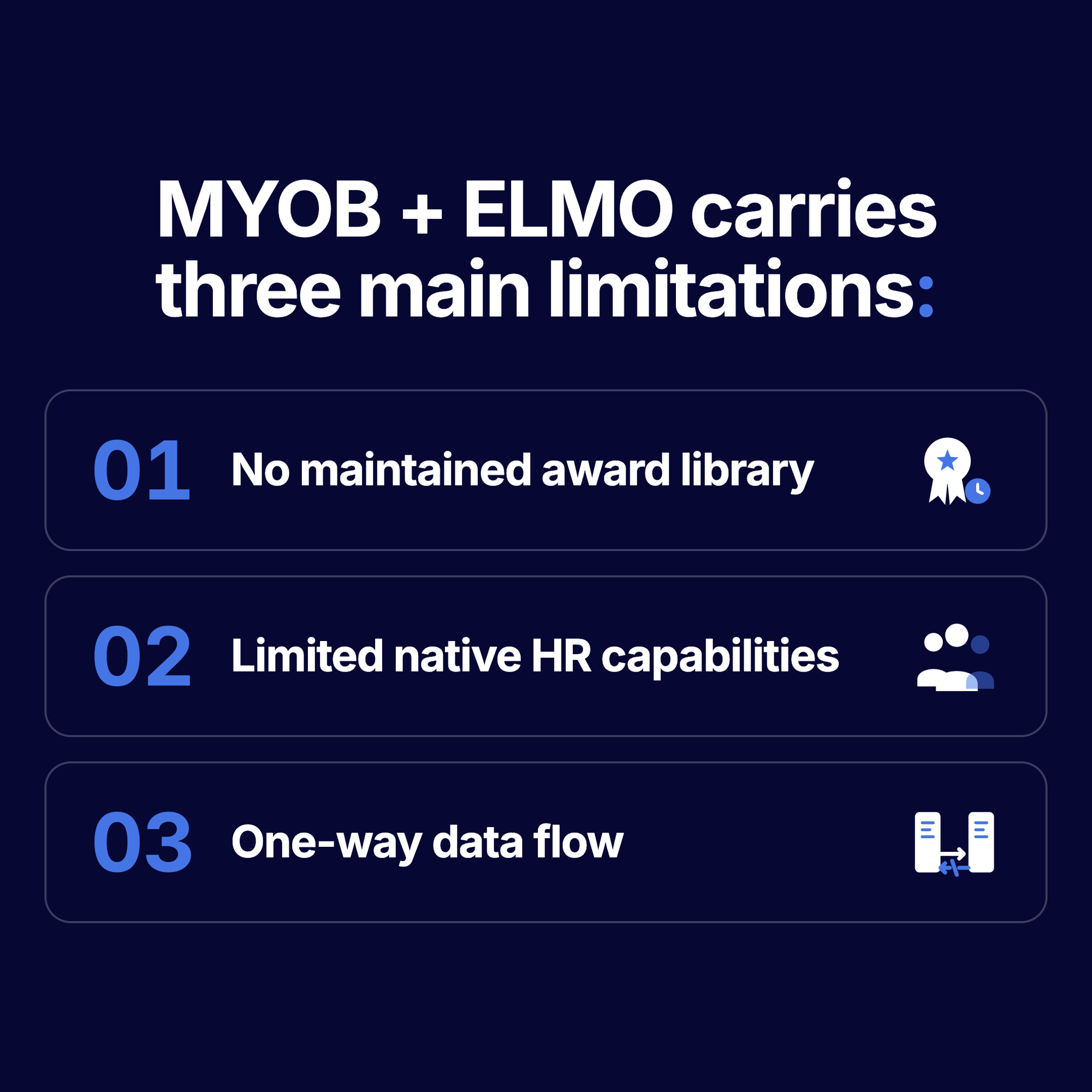
MYOB Acumatica's payroll doesn't extend to full HR and workforce management — there’s no maintained award library and limited native HR capability. Businesses that need more are typically directed toward ELMO, connected via a custom integration through a third-party API. That connection is one-way: data flows from Acumatica into ELMO, but not back.

Wiise + EOS: The fully integrated two-way connection

Wiise and Employment Hero EOS integrate directly, with no third-party connector in between. With Wiise + EOS, Data flows both ways, in real time, because the platforms are fully integrated to work together.
elmo-limitations-navy

How MYOB + ELMO and Wiise + EOS compare

We’re not comparing feature checklists here, we’re comparing architecture — what data flows, how it flows and what your finance and HR teams are left managing when the rubber hits the road.

Wiise + EOS

The two-way connection

0

MYOB + ELMO

The one-way connection

Wiise + EOS

MYOB + ELMO

Integration type
Direct API — formal partnership between two platforms, no intermediary
Bespoke third-party connector built and maintained separately
Payroll
Full payroll via EOS, integrated with Wiise financials
Native payroll in MYOB Acumatica
HR & workforce management
Native in EOS — hiring, onboarding, performance, leave, rostering, compliance
Limited capability — ELMO is required as a separate platform for full HR capability
Australian award compliance
50+ pre-built modern awards in EOS, with automatic Fair Work updates
Limited – Includes an awards engine where individual awards are built upon implementation, but with no automated maintenance or updates, introducing compliance risk.
Timesheet sync
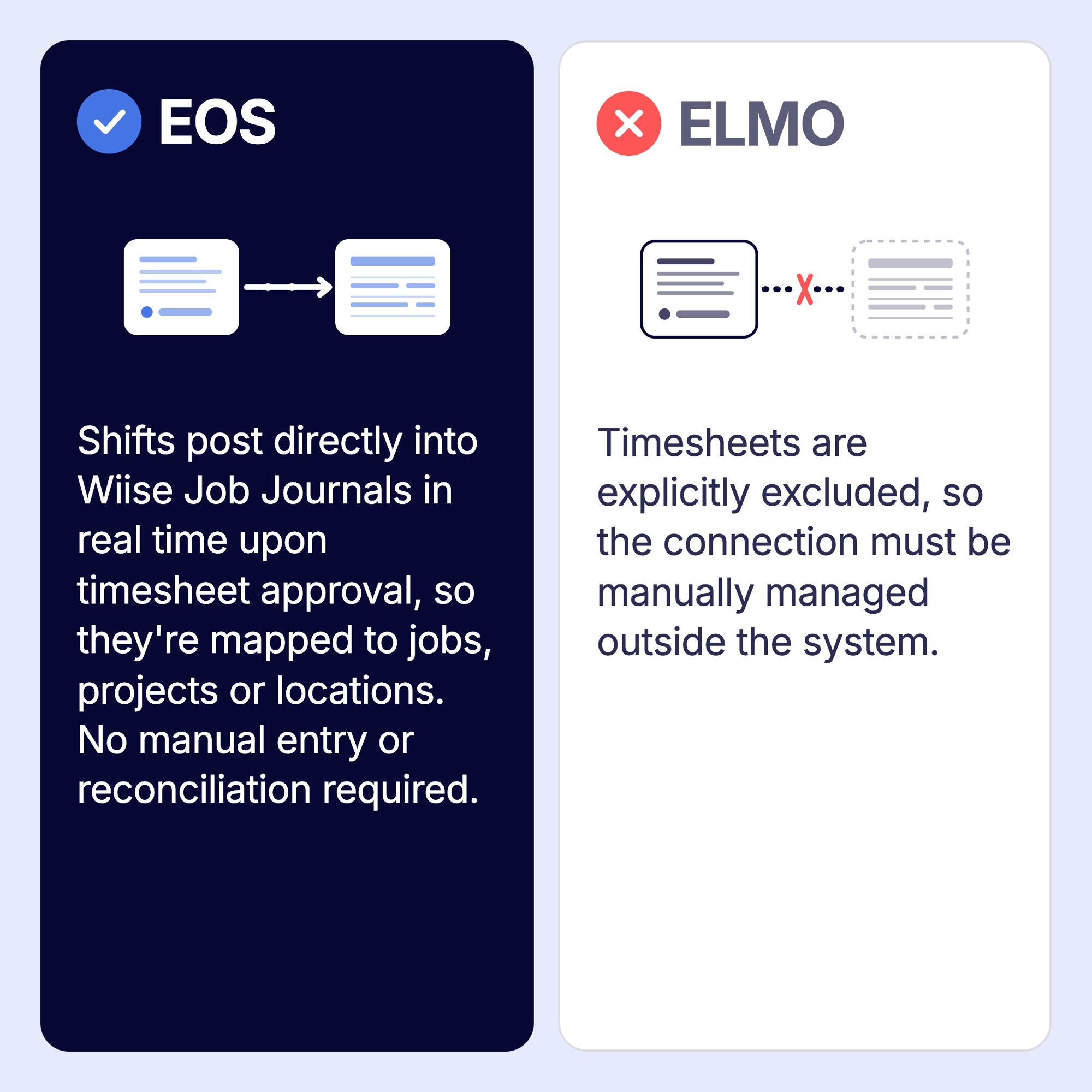
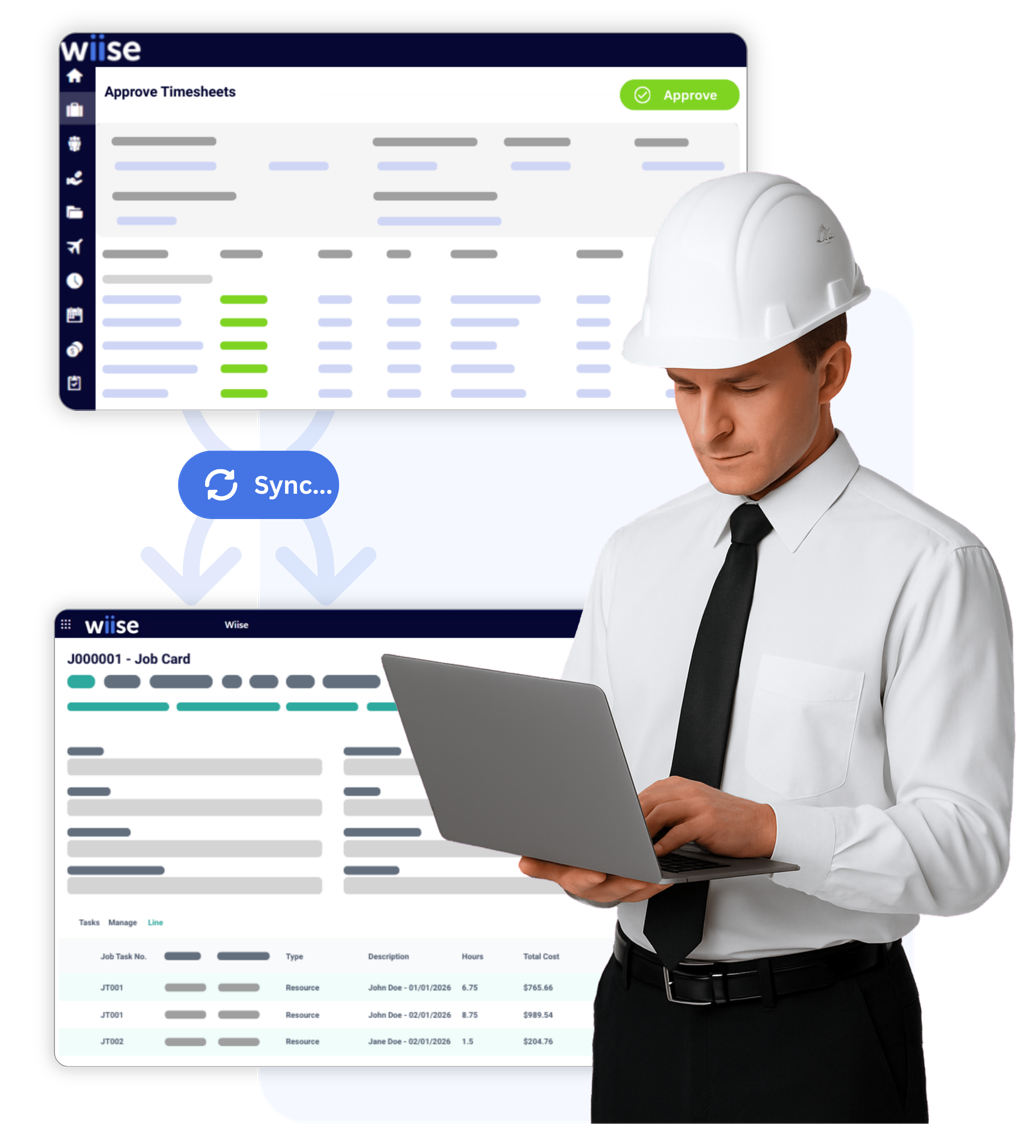
Real-time — approved timesheets flow from EOS Work App directly into Wiise Job Journals
Explicitly excluded from the ELMO connector
Leave balance sync
Automatic and bidirectional
One-way from Acumatica to ELMO, via scheduled CSV upload
Job costing
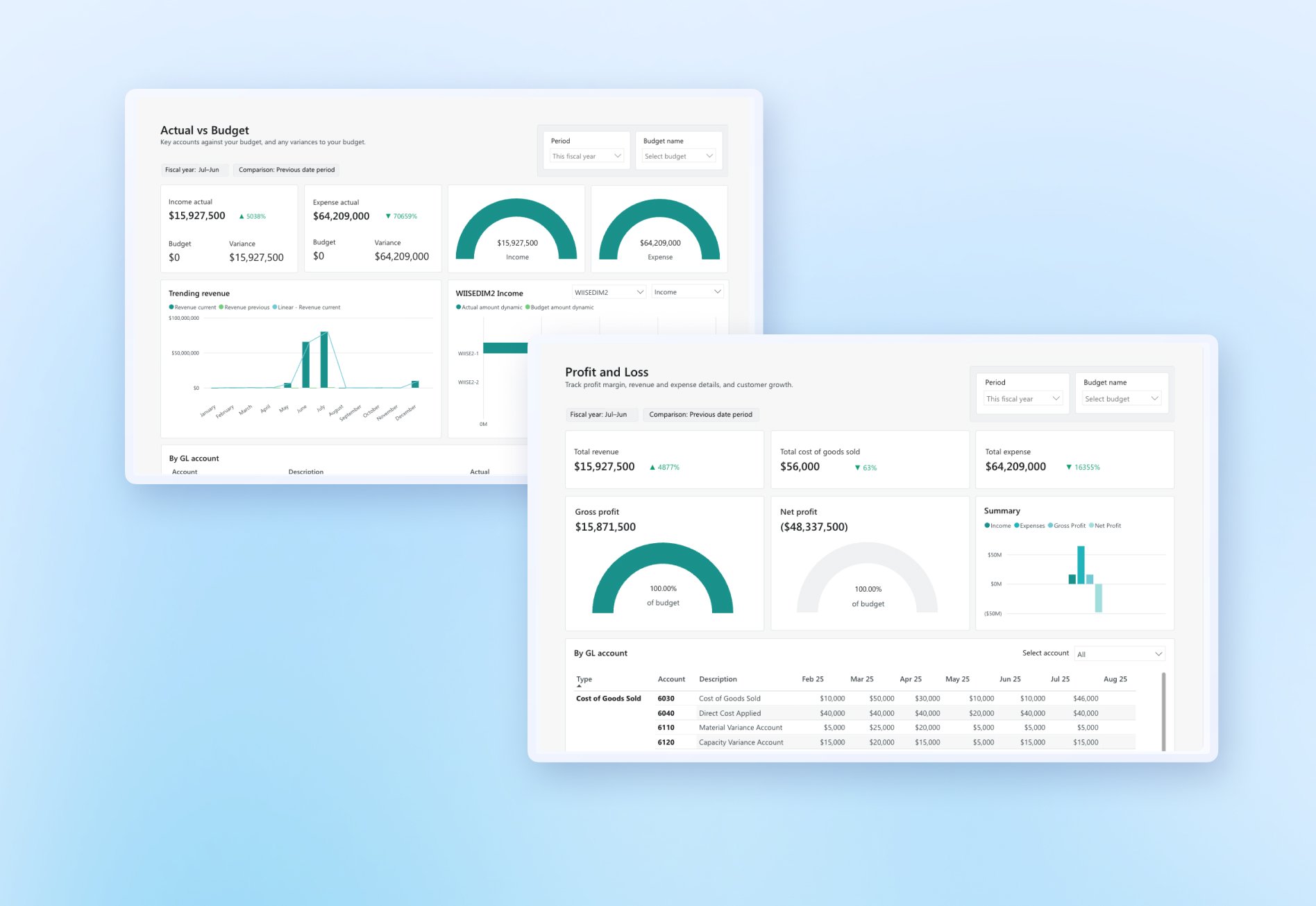
Actual, costed data from approved timesheets means users can pivot on projects without waiting for a pay run.
Payroll links to jobs based on estimates only — actual labour costs do not flow through to job costing
Connector cost
Included – no separate fee
$290/month + ~$4,900 setup for the Momentum connector, on top of MYOB and ELMO subscription

The award compliance problem

An awards engine without a maintained library isn't compliance – it's exposure. After all, you might be perfectly compliant on day one, but rapidly changing updates mean, by day two, you could be exposed.

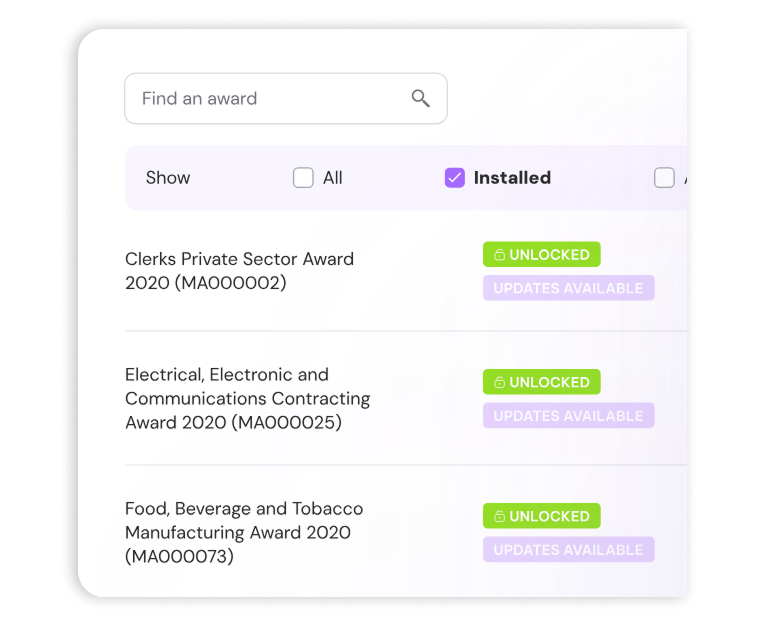
MYOB Acumatica includes an awards engine, but no built-in library of Australian modern awards. Businesses need to configure and maintain their own pay rules, meaning every Fair Work update is a manual task, and a compliance risk if it's missed.

With this arrangement, you’re on the hook to keep up with every single update from the Fair Work Ombudsman (FWO), communicate the relevant changes to your implementation partner, and hope they’ve been implemented correctly.

You become 100% responsible for subscribing to FWO updates, ensure you receive them, contact your implementation specialist to update, hope that they have been done correctly and pay for the pleasure.

Employment Hero EOS includes 50+ pre-built modern awards that update automatically thanks 

You become 100% responsible for subscribing to FWO updates, ensure you receive them, contact your implementation specialist to update, hope that they have been done correctly and pay for the pleasure.

payroll

The timesheet gap

Timesheets are excluded from the ELMO connector. For job-costing businesses, that's a significant gap.

For businesses running shift workers, project billing, or job costing, timesheets are where labour costs are actually created — they’re the direct link between what your people worked and what your jobs cost.

timesheet-gap-light

The connector costs

With MYOB + ELMO, you’ve got one connector, three vendors and an ongoing fee for a limited result – not to mention an unnecessary increase in exposure to genuine and significant compliance risks.

Connecting MYOB Acumatica to ELMO via Momentum costs $290/month plus ~$4,900 in setup — on top of both platform subscriptions. For that, you get a connection that excludes timesheets and syncs some data via scheduled CSV uploads rather than in real time, with no guarantee of compliance.

It also means three separate vendor relationships in your critical payroll data chain. When something breaks, there's no single accountable party. With Wiise + EOS, you get:

  • No connector fee
  • No middleware
  • One support relationship


Proficient young male employee with eyeglasses and checkered shirt, explaining a business analysis displayed on the monitor of a desktop PC to his female colleague, in the interior of a modern office

The platform problem

Every quarter, MYOB Acumatica asks your team to stop and upgrade. With Wiise, you’ll never have to worry about a manual upgrade.

Wiise updates automatically, so every customer is always on the latest version. That means new features, compliance updates and security patches roll out monthly with no action required from you or your partner.

MYOB Acumatica updates quarterly, and each release requires a manual upgrade. That means downtime to plan around, a partner to coordinate with and a window where your team is either disrupted or running on an older version. For most customers, that window isn't a just few days, it's just the norm. At any given time, the majority of MYOB Acumatica customers are at least one version behind.

Managing a separate system update cycle isn't just an IT problem. It's time your finance and payroll teams spend managing around the platform instead of using it.

Job costing

The difference in truly connected systems

Businesses running on Employment Hero EOS see significant benefits, like these:

  • 89% decrease in paperwork
  • 81% improvement in payroll efficiency
  • 42% reduction in time spent on HR administration
  • 84% of users say they’re happy with the system

For Wiise customers, the gains compound across the whole business: SGESCO-MAX reduced fortnightly payroll processing from two full days to two hours and saved an estimated 2,500 staff hours per year — not by upgrading one tool in isolation, but by running finance, operations, and workforce data in the same environment.

These outcomes depend on data flowing both ways. A connector that excludes timesheets, syncs leave by CSV upload, and routes data through three vendors doesn't produce them.

See Wiise + EOS in action

Payroll FAQs

MYOB Acumatica has payroll built in — why would I need ELMO at all?

Acumatica's built-in payroll handles pay processing, but it has no built-in HR and workforce management capability. Businesses that need hiring, onboarding, performance management, rostering, compliant award interpretation, and employee self-service typically need a separate HR platform and workforce management integration, which is where ELMO enters the picture. The question isn't whether Acumatica does payroll. It's whether payroll alone is enough.

Does MYOB Acumatica handle Australian modern awards?

Acumatica includes an awards engine, but it doesn't come with a maintained library of Australian modern awards. Businesses are entirely responsible for configuring and maintaining their own pay rules. Employment Hero EOS includes 50+ pre-built modern awards that update automatically with Fair Work changes by Employment Hero’s dedicated team of payroll experts.

Why does it matter that the ELMO connector is built by a third party?

A third-party connector is a separate product with its own maintenance cycle, its own support team, its own update cadence, and its own set of potential bugs and issues. When MYOB or ELMO makes a platform change, the connector may need to catch up separately. When something breaks, there's no single accountable party — you're coordinating across three vendors. That's a different risk profile from a direct platform integration.

The connector is only $290/month — isn't that reasonable?

That's $290/month on top of both MYOB Acumatica and ELMO subscriptions, plus approximately $4,900 in setup costs. And for that, you get a connection that excludes timesheets and syncs some data via CSV uploads rather than in real time. Whether that's reasonable depends on what you expect the integration to actually do.

We're already on Wiise. How disruptive is adding EOS?

Not disruptive at all. Existing Wiise customers can add EOS without re-platforming. Your current financial workflows stay intact. So you're extending what's already running , not starting a platform replacement project.


Ready to see what a direct integration actually looks like?

Our comparisons here are based on publicly documented information about both options. If you want to see how Wiise + EOS works in practice — and what it would mean for your business — reach out to our team for a demo.