




.svg)


.png)

.svg "Wiise logo")
In this episode:
Running an NDIS provider has never been harder. Audit rates have tripled, SCHADS increases are squeezing margins and claim rejections are quietly draining cashflow. In this episode, CEO of OPS and Fractional CFO Adrian Tan breaks down the exact levers to protect your bottom line — from fixing your working capital cycle to unlocking client-level margin visibility — to help you understand how to keep growing without the financial chaos.
Guest: Adrian Tan, CEO of OPS + Fractional CFO
Uli: Welcome to Wise Conversations, the podcast that explores what it really takes to scale a business. Growth is exciting, but with it comes complexity, bottlenecks, and some tough decisions. So each episode, we unpack the real challenges growing businesses face and the practical solutions that help them succeed. I'm joined today by Adrian Tan, CFO of OPS, a business process outsourcing firm working with NDIS providers on finance and HR functions for their organisations.
Uli: If you're an NDIS provider, you've undoubtedly felt the mounting financial pressure of keeping up with your bottom line. Audit rates have tripled since 2024, SCHADS Awards are increasing, which puts pressure on your profitability. Providers often have a 2 to 3% claim rejection rate, which if you're processing thousands of claims can quickly impact your cashflow. On top of that, it's really difficult to see participant budget utilisation, which means you can easily tip over into over-servicing participants. Today, Adrian, CFO of OPS, breaks down the exact levers to protect cashflow, stay audit-ready and still grow. Adrian.
Adrian: Thank you very much, Uli, and thanks again for letting me join this podcast.
Uli: So for leaders outside of NDIS, can you explain a little bit what makes scaling an NDIS provider uniquely difficult compared to other services?
Adrian: Yeah. Look, I'll give you a bit of backdrop on my journey. When I joined as a CFO here, one of my main clients is a registered NDIS provider. I didn't know anything about NDIS — I came straight out of the frying pan with a background in other businesses and industries. Quickly understanding the business structure and their operating needs was really important.
Adrian: Finance has always, from what I understand, been a bit of a back-burner function — even outside of NDIS. It's always been a bit of a crunching machine: the people sitting in the corner processing paperwork and making payments. But there is always an emphasis that finance is pretty much the critical part of any business. And in NDIS, there's a lot of complexity.
Adrian: When I learned about NDIS — and firstly, what does NDIS stand for, that was the first thing I did — I realised there was a lot of complexity because of the government regulations and regulatory framework. For me, it was about understanding that framework and then seeing how the finance processes aligned to it and to the operational needs of the business. There's a lot of work to be done.
Adrian: The complexities for clients under NDIS — translating from delivering the support through to creating timesheets for support workers, delivering the supports, and then converting to pay slips — especially under an EBA or SCHADS, there's a lot of complexity involved. That's where people, systems, and processes come into play. Those are the three things I look at.
Adrian: For one of my clients, the systems weren't up to scratch. They were using MYOB. When they transitioned, they moved to WISE, which is a much bigger, better, and more stable system. That's where the journey began. With the right skill sets and ability to use data, we were able to provide much better and faster processes — reducing their debtor days from over a hundred days down to two days, and reducing issues with compliance and claiming. Clean claiming, fewer issues coming from the NDIA. That was one of the key goals as part of this transformation: helping the NDIS provider go from that state to a much more finance-driven and data-driven state.
Uli: There's a lot there. I want to double-click on something you mentioned a bit earlier — was it systems, people, and process? Can you expand a little bit on that?
Adrian: Yeah. I have a background in engineering, but I ended up being an accountant. So my brain is still wired to an engineering approach, but with an accounting delivery mode. When I look at things, I break them down into people, processes, and systems.
Adrian: Systems are much easier to manage because it's a system — off the shelf, custom, or built in-house. Processes you design; it's manmade. You bridge the gap between the person and the system through the processes to deliver the outputs. And then the people themselves — to be honest, that's the hardest part. It's human. The right people doing the right job with the right skill sets and experience — that's where recruitment is the hard part. Finding the right character fit for the business as well.
Adrian: That's what I did with my journey for the client. I had to recruit a number of finance team members to be ready for the system. When I came in, the skill set and experience wasn't there. You could have the best system, but with the same team, there'd be no chance.
Uli: Yeah. So a lot of the work you do is blending those three things together seamlessly. We often hear about these kinds of businesses or organisations starting from people wanting to solve real problems in their life — maybe they've had first-hand experience with people with disabilities. So they don't really come from a typical business finance background. This finance complexity very much seems to be an afterthought as they grow. They grow into this complexity and have all these sorts of issues, and then they become aware that they need to sort out this finance stuff — especially when making claims to the government and everything else. Is that what you see in the field as well?
Adrian: Yeah. And making sure that the finance team understands the context of what they're doing and delivering, because in any business, cash is king. Once the support is delivered to the participant, we should be ready to go for claiming — putting the claim through the NDIA and hopefully the money comes in. Sounds very simple. But at the beginning, when I saw it, it wasn't. Lots of paper, lots of Excel, more Excel, more paper, and lots of manual work.
Adrian: At some points the team had to drop everything and just process manual timesheets. There was a lot of work to do to automate those manual processes. And then from automation, we can systemise it even better. In WISE, we use KeyPay as a parallel system, and that's integrated with another platform — a CRM called Brevity. So now all timesheets are digitised, feeding directly into KeyPay, which crunches through all the timesheets using the award interpreter and spits out payslips for the support workers with 100% accuracy — no more manual intervention, no more writing down allowances to be paid for each worker by hand. That's not practical.
Uli: That's amazing. Yeah, a lot of risk for things to go wrong.
Adrian: It is. Lots of errors, and then you have lots of support workers calling you asking why they're underpaid. And then you have legal risks for that too if you're underpaying staff members.
Uli: I wanted to touch on rejected claims. Let's say you've got your data from your timesheets and you then need to make a claim to the NDIS. Can you talk about what that looks like if that process breaks down? I'm sure there are delays involved — if the claims get rejected, what are the flow-on effects? What things did you see in organisations around working capital and trying to make sure cashflow was coming in?
Adrian: When I look at it, going back to people, process, systems, I take a holistic approach. When I came in, I looked at the finance process first — what are we doing? And then I looked to the left, because finance doesn't actually activate the process until something else happens in the business, some business transaction or trigger. By looking to the left, I get to see the whole end-to-end workflow.
Adrian: That's where I go outside of finance and business-partner with the rest of the business — supporting the rostering team or the HR team and understanding how we get a timesheet from a support worker on time and accurate to the payroll team. Once it's in the payroll team, it should just be a processing function. The root cause analysis is really important to see what the bottlenecks are that are creating those inefficiencies, and importantly, what's driving those risks and ultimately maybe even compliance errors.
Adrian: Going back to claiming — claiming can be done in a couple of ways under NDIS. With a client's agreement, you can claim based on the actual hours supported. That means you've got to wait for the timesheets to come in. You pay payroll on the fortnight, so you have to wait for two weeks, pay the support worker, and then after that start the process to claim. So you can see your working capital cycle is already stretched — pay first, claim the money later.
Adrian: There's another process the NDIS allows for: you can claim weekly. You have the budget for the client divided by the number of weeks, and that gives you a fixed amount. Our client changed to this model because it was one of the fundamental reasons we could claim faster. So we have a fixed amount claim every week, which means the cashflow cycle has now gone back to positive — every week you get money, every two weeks you pay salary.
Adrian: With weekly claiming, we also have a much more robust data set. All the amounts to be claimed go through a very disciplined process. We've developed in-house dashboards and analysis to track that week to week, making sure that billing targets are hit. Any variances are called out and analysed — if a client wasn't available and went home, we shouldn't charge for supports, so we'll bill less. That's correct.
Adrian: It's small things like that. Working capital — looking at the working capital cycle from delivery all the way to cash collection. Every NDIS provider should be looking at that carefully, because it's a very parallel kind of expense business. The majority of costs in this industry is payroll — 60 to 80% of your cost base is paying salaries, because it's all social supports for participants.
Adrian: NDIS providers are all looking to help the client — provide the support, the care. So when it comes to finance, it can be the back office and the last on their list. They can forget about things like: how much money are we making? Are we recovering our costs? When you're running a business, you have to be mindful of that. You need to elevate the finance function to the front — but where it works hand in hand with the business. They deliver the care and continue to comply with the regulations, and the finance function operates at the same level.
Adrian: Rather than being left behind and realising we don't have enough money to pay payroll because we haven't claimed or the money hasn't come in, and no one's chased the cash. I actually had another client in a similar situation — their receivables were growing and no one was chasing the cash. My team had to come in, set a process, and help manage their debtors. Now the cash is back to normal and their debtor days are back to single digits. If you don't keep an eye on that, you'll have complex issues that can stop the business — because you can't care for a client if you can't pay the support workers.
Uli: Yeah. Okay. And how do catalogue codes, plan alignment, and split billing kind of play into these kinds of businesses and organisations?
Adrian: We have a very structured process. When a client comes into our care, there's a lot of preparation work. The operations team makes sure the intake is done properly. Finance also takes over from the contractual and legal perspective, and that triggers the billing process and framework setup. Once we know the client and what supports they need, all the codes are correctly identified.
Adrian: It then moves into the finance process where we have the billing structure set up. As I mentioned, once it goes into the billing structure, we know the client code and we've identified all the NDIS codes that we claim against — aligned with the agreement with the funding. We track that using lists and SharePoint. So if there are any changes, we know the flow-on effect to billing will be actioned quite quickly.
Uli: Yeah. So what did it look like previously in the old system versus WISE now, and how has that changed the financial management for the organisation?
Adrian: I try to forget about that — it was a strange time. All I can say is, the old processes with the previous accounting system were all manual. It was buried in spreadsheets on individual computers. We had one person looking after pretty much the whole lot. There was also a business continuity issue with that — if that person was on leave or not around, who knows? Because there was no documentation either. It was all corporate memory, corporate memory spreadsheets, designed around that particular person.
Adrian: When I came in, I saw that and thought — from my experience, the best way to support the function of a business is to build the processes around the business, not around the person. There was a lot of that because of legacy and the way the finance team was structured. So yes, it was very manual. I had to wade through spreadsheets and put together information to understand where the billing format was, where it was put into the accounting system, and what processes sat in between — updating codes, changing spreadsheets. Very manual, all corporate memory, and lots of spreadsheets outside of MYOB — buried in SharePoint and shared drives.
Uli: Right. Yeah. So I imagine that would have been a lot of importing, exporting, and spreadsheet calculations.
Adrian: Yeah. A lot of manual work, and then a process to upload to the NDIA portal, a process to create the invoices in MYOB — very separated. And there was always room for human error, which would sometimes drive non-compliance. We'd get messages from the NDIA saying a claim didn't look right, and then we'd have to go and explain or document the data. That consumes a lot of precious time from the business.
Uli: So what does it look like now with WISE and a proper system in terms of your financial process? I imagine everything's plugged in — we've got our NDIS API connection. Can you give us a view of what that looks like now?
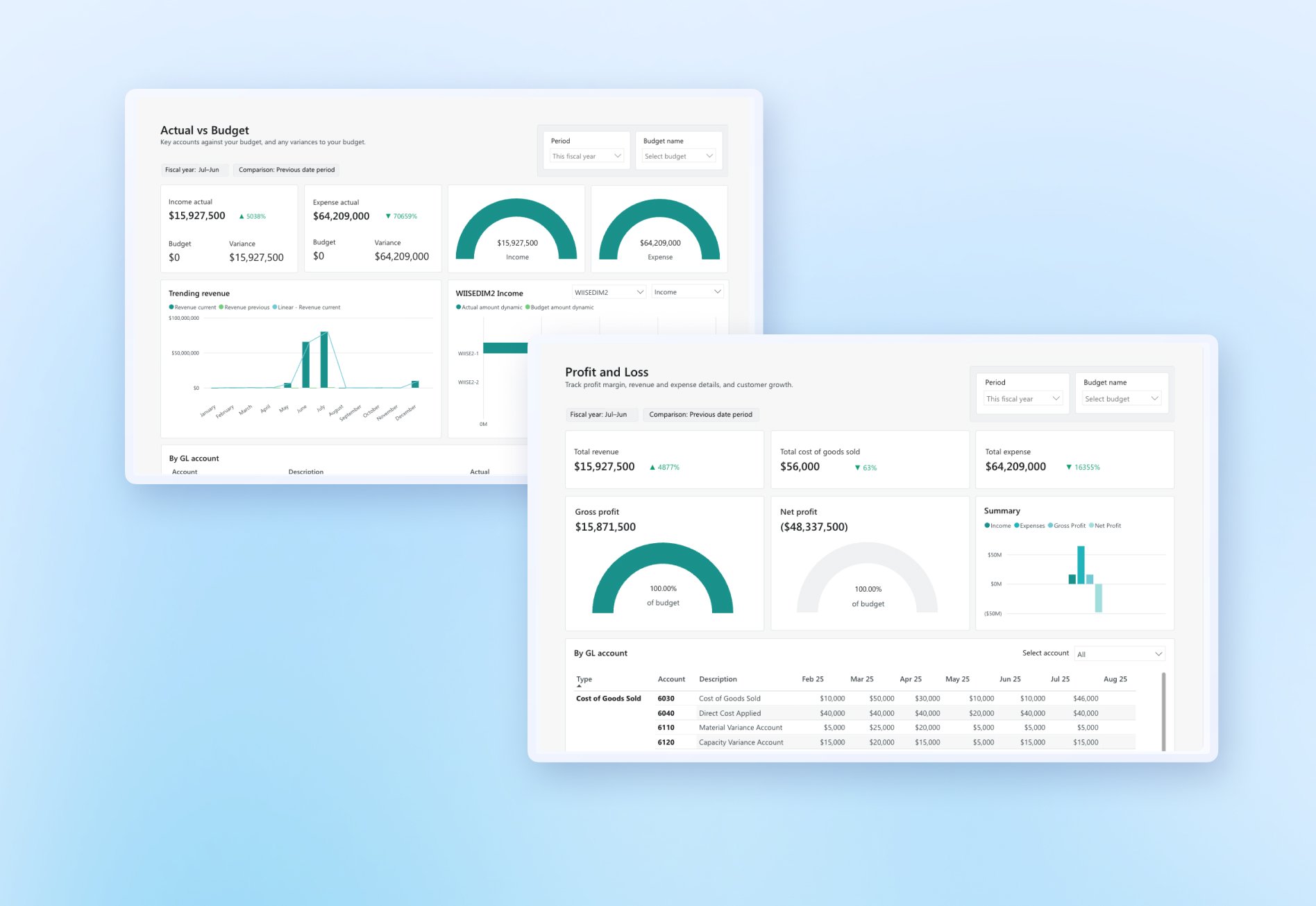
Adrian: Yeah, much faster. Even before the integration function that WISE released, we had already structured the processes and set the databases and spreadsheets — yes, the spreadsheets are still there. But we also went further with data analysis. We developed our own custom Power BI dashboards for the client so they can analyse all the billing targets and debtors and receivables to make sure cash has been collected.
Adrian: The results of that process have made claims much cleaner — with pretty much no exceptions at all. And collecting cash is much faster, down to a couple of days now. That's as fast as you can get with the NDIA. With the integration now, it's reduced the remaining manual work even further. Especially with reconciliations — when the claim is lodged and the cash comes in, you want to reconcile and make sure claims match the receipts and remittance from the NDIA. We used to do that manually; that was one of the last remnants in our processes. The integration has cleared that area now.
Uli: Excellent. So was it risk reduction? What was the catalyst for this organisation to move or change systems? Was there anything that happened in the business that made them realise it was a problem? Was it just a stage of growth as they got big enough?
Adrian: When I joined them as a fractional CFO before I set up OPS, they were already quite big. They were still working on legacy systems and they had their own way of doing things. So they'd scaled up and were kind of late to the party — rather than the usual situation where a business is growing and then says 'now I need a bigger system,' they were already big but still holding on to old processes and systems that were far too small for the business size.
Adrian: That's when the owners and directors decided they wanted to keep growing, but couldn't keep growing with what they had. That was the catalyst to transform the team, find someone to lead the finance team — which is why I joined — and transform it so they were ready for continued growth. We now have a system that's robust, transparent, and strong, such that as the business grows, it can flex and maintain that. Especially with the NDIA.
Uli: Yeah. And is there a threshold that makes sense for people to think about when they need to upgrade or change systems?
Adrian: That's a really good question. At OPS, we've got a couple of other clients that are small to medium providers, much smaller than the big client we were talking about. One of them spoke to me about looking to move systems, and WISE was one of the ones on their list. When I looked at their current processes, there was still a lot of work to be done. And when I looked at their finance team, I realised it looked quite familiar — they've only got one finance person in the team.
Adrian: In order to use a much bigger, more powerful system like WISE, the people part plays an important role. We need to find the right skill sets to actually deliver and operate the machine. It's all well and good to give them a system and have them pay for the implementation — but then who's going to press the buttons?
Uli: Yeah, how do you get value out of the system? You need to invest in it. Yeah, makes complete sense. So we've talked about margin erosion and how difficult it can be to stay profitable as an NDIS provider, which might be surprising to some people who aren't familiar with that industry. Can you talk about what things you look for in an organisation to help keep their margins healthy?
Adrian: I think the first thing is to get visibility. Going back to my case — this was one of the other main matters I was trying to deal with when I joined. The financial reporting — which is really critical management accounts during the month — was lacking. There were very minimal reports, only system reports coming out of MYOB. It was very hard to identify and analyse margin. In fact, it was physically impossible.
Adrian: It came down to two things. First, the accounting system wasn't set up in a way that gave you granularity. Some expenses weren't even in the right buckets — it was all centralised. You'd have to extract all the data and do a lot of manual Excel manipulation to recreate the margin analysis. When we moved to WISE, I created a brand new chart of accounts from scratch, designed and tailored based on the business.
Adrian: I knew enough about the business to create the accounts with that in mind, so that when data is recorded and captured in WISE, we can calculate margin quite quickly within the GL. With the dimensions attached to that data, we can now extract and look at margin down to a very fine level — by client, by a particular cost area, by supports as well. That had never been done before.
Adrian: When the directors saw this for the first time, they went, 'I've never seen that before.' We could now see where particular clients were not strong enough in their margins and analyse it, then take that back to the business units and operations team to look at rectification actions — to see where we can improve by optimising the supports or on the finance side as well. Now, with that visibility and transparency, you can run a business much, much more clearly than before.
Uli: So it sounds like the dimensions gave that extra capability that the old finance system didn't have.
Adrian: Yeah, the old system didn't have any dimensions. For example, the client or participant — there are many dimensions attached to that. We've set up the key dimensions we wanted to capture: the client dimension themselves, the funding code, even the property where the client resides, and some other cost areas. Once the dimension setup was in place, it's quite easy to extract from WISE with the dimensions attached to the participant.
Adrian: We run that into our customised Power BI report to look at the participants' overall margin by breaking down all the costs. We've actually broken it down to three levels — level one, level two, and level three. Those are the three core areas that generate the cost profile of a participant. We can use that to work out how much margin is needed to cover the rest of the business — the overheads. We've separated that clearly. Now it's very easy to work out what revenue growth will actually achieve in terms of bottom line growth as well.
Uli: Yeah. And can you point to any specific areas or specific changes that you might have made because you've had this insight?
Adrian: One is the care model. All participants will have a specific care model when they come into care that's approved. Sometimes the care model is not aligned with the actual model. Sometimes a provider may actually over-provide supports. For example, if a client is budgeted for one-to-one — that means one support worker looking after them — but in the actual case of supporting them, they may need another worker because of their needs and their complexities.
Adrian: That extra person is a cost to the business, and that cost is assigned to that client. So when I look at the margin, I'd expect to see X percent based on one-to-one, but if we provide an extra person, obviously the margin will shrink. We see that in our monthly analytical reports, where all the clients and their margins are tabulated, graphed, and benchmarked. We can see which ones are lower than normal and analyse what happened.
Adrian: If it's a one-off thing where for that month we had to use a couple of workers, no problem. But if it's a continual thing where the client's needs have changed, it gives an opportunity for the operations and commercial finance team to go back to the plan manager or support coordinator and say, 'Look, we need more funding. Something has changed. Here's the documentation, here are the supports, I think we need more funding.' That's where it's really great to see that analysis for the first time. When the margins drop, something's happened — and if it's continuing to drop, we know whether we're going to absorb that or whether we have a case to go back and ask for more funding.
Uli: Right. So previously it wasn't like that at all?
Adrian: No, it was all based on just a general understanding of the client's care. It wasn't documented — there was no financial analysis behind it. Everyone just knew that there was extra support going in, and there must be extra costs being taken up, but no one was taking the next step forward and saying, 'Okay, how much should we ask for in extra funding?' With this analysis now, you have the granularity, you have the data, you have the numbers. You can go back and ask precisely — 'This is the extra support needed for this client. Please increase the budget.'
Uli: Yeah, makes sense. So let's say somebody's running this older style of process. What are the first steps they should take to upgrade? Is it people, process, or systems? Where should they point to first to get a diagnosis of where they're actually at and what they should be thinking about?
Adrian: Starting in any of those three areas is not the wrong move. I'm going to start somewhere. When I first joined and looked at this client, the first thing that stuck out was the accounting system — the size of the business compared to how small the accounting system was, there was clearly a misalignment. So I started from there and then branched out and looked into the processes and then onto the staff and the finance team.
Adrian: I'd say just pick one and pull on the thread a little, because one will lead to the other two. It doesn't matter where you start — pick one, see what you find, and it'll lead to the others. You'll be able to unearth what's not working or what can be improved. The directors gave me the ability to put a plan in place, and a lot of transformation had happened over the course of a year.
Uli: Keep pulling and pulling. Yeah. So it sounds like visibility was the key thing for people to look at what to improve and diagnose where things can be better. Were there any other things that stood out? Maybe compliance, auditing, or any other pain points in the business that you stepped into?
Adrian: Yeah. Finance is one core part of the business operations. Another really important area is the technology side — the back-end infrastructure and the client management system, or CMS. Many providers use a particular CMS to manage participant information, data, and rostering. That's another important tool. The finance process systems could be only as strong as the other systems around them.
Adrian: My journey to improve the finance function and migrate to WISE was done in conjunction with updating and upgrading the systems around it as well. Otherwise, it's like the weakest link in the chain — the system is only as good as its weakest link. The IT team worked on another transformation journey to improve backend security and more integration between the systems. That was a roadmap that took at least a year and a half.
Adrian: A good example: timesheets were done paper-based for a long time. Then using the CMS as a digital timesheet system, support workers could do the timesheet using an app on their phone, rather than filling out a piece of paper, emailing it to the payroll team, who would then print it out and manually transcribe handwritten timesheets into a spreadsheet. Can you imagine that effort? So that was digitised, and an integration link was built between the CMS, WISE, and KeyPay. All that extra manual work disappeared.
Adrian: And on the compliance side, the client set up a governance team to look at compliance, quality, and audits — more support on the operations side. But that also gave support to finance, because if they don't have problems, finance doesn't have problems.
Uli: So it sounds like, if I can summarise a little bit, the dimensions and the capabilities of WISE along with the integrations with the other systems were the key drivers behind upgrading?
Adrian: Yeah, because we wanted scalability. The platform with WISE uses Business Central — Microsoft is the core system behind the business. So all the products, integrations, and security need to be aligned with that framework and technology stack. Picking WISE was a good choice. It's highly scalable, and there are always continuous updates, features, enhancements, and product developments. That will always improve the finance function — continuous improvement built in.
Uli: Is there any takeaway you'd like to impart on other people dealing with these sorts of challenges — maybe feeling a bit overwhelmed and wondering what they should think about next?
Adrian: Yeah. First of all, don't give up. There's always a big challenge. I was speaking to one of my clients the other day — the CEO — who wants to update his parallel processes. He's looking at WISE and is implementing a new CRM. He was 10 to 20 steps ahead in his mind. I had to pull him back a bit and say, look, it's a big journey. Good that you have that roadmap in your head. But looking at your team — are they ready? Because there's a lot of change management involved.
Adrian: Change management happens across the board — it's not just finance. It's operations, back office, everyone that uses technology, everyone involved in the business. I told him you can definitely do a phased approach. Work with what you've got for now. That's what I did — I was stuck with MYOB for several months before WISE was implemented. I also made the decision not to fix certain things, knowing that the new system and new processes I was setting up would be effective once launched. I wouldn't want to waste precious effort fixing something that wouldn't be needed down the track.
Adrian: Those are the critical decisions an NDIS provider leader needs to make: work with what you've got, see what's critical, plan the journey, look at those three things — people, process, and systems — and see where the effort is needed the most.
Uli: Yeah. Any areas of risk you think are worth pointing out? You mentioned phasing in and out of systems and rollout. Any other risk reduction tips?
Adrian: Yeah. Going back to people — finding the right finance team members to fulfil particular roles, like an accounts payable officer or payroll officer. Recruitment and finding the right staff is still the most challenging thing. No amount of AI right now can actually help with that. I've read through many, many resumes building the finance team to find the right skill set fit.
Adrian: I've always believed that when you recruit someone, you don't recruit for the now — you recruit for the future. What I had in mind when rebuilding the finance team was to have staff with data capabilities, not just transactional work. Not just processing payments or invoices, but actually having the ability to look at a data set and add value — to see that an expense looks high or that revenue looks a bit low, and then cross-reference to a previous month, see the variances, do a little chart. That mindset is where the value is. That's what helps the business identify issues early rather than waiting until the end of the month or, worse, not seeing it until it becomes a very big problem.
Adrian: I think the challenge now is the people side — finding the right people and training them. And with the younger generation, there's a desire for remote and hybrid work. Finance has always been quite traditional — at the desk, processing. There will always be flexibility toward that, but that will only happen as more and more automation occurs, either within the system or with the help of AI.
Adrian: But when a business is scaling, growing, and transforming, it's all hands on deck — staff need to be in the office. We need to collaborate and train. I've trained the finance team to business-partner with other departments, understand the issues, look to the left and find the root cause — rather than trying to fix things themselves and often creating another problem. Swapping one problem for another rather than fixing the root cause. That's where OPS has been helping those clients: taking on some of that work if they don't have the in-house expertise, doing it on behalf of them.
Uli: Excellent. You mentioned AI, and I know you've been talking to our product team. I'm curious — what are you excited about with AI? What kinds of things are you thinking about for the future?
Adrian: Looking ahead — and it's an interesting, bright future now that AI is permeating everywhere. At the moment, the most common use case of AI is fixing emails and grammar, or revising content in documents. I think we're pushing the boundaries. From a finance perspective, it's towards analysis of data sets.
Adrian: At the moment, the team has created their own Power BI reports and we've customised that. The team has the ability to analyse that data — but the analytical function is still a human process. You look at the chart, eyeball it, look at the big red marks and go, 'Okay, this doesn't look right.' Where AI can come in is to do that for you with set parameters — looking at exceptions, tolerances, and variances, and calling them out. 'Hang on, this margin looks low and it's happened for three months.' That's where the power of AI can help — to analyse that, keep a record, and maintain a history.
Adrian: Otherwise you're always looking at a screen going, 'That looks low — let me double check.' With AI, you can have that at your fingertips very fast. So I think that's one of the most promising use cases for AI — much more robust and quick data analytics. You don't have to wait for a month-end report; you can run the AI tool or agent in advance. So when you come to the meeting, you don't have to squint at the screen — it's already there.
Adrian: The other area is RPA — robotic process automation. There are still ways to automate a lot of the transactional and manual work. I'm still looking into automating and reducing the manual effort in accounts payable processing. Some of that has been around for decades, like basic OCR — optical character recognition — scanning an invoice, extracting the vendor data, and plugging it into your system without manual typing. But we can go a bit beyond that — looking at the history of a vendor, seeing if something was paid already, or flagging that an expense has gone up from last month. Did we know that? That's where AI can be really useful too. It's about adding value. If it's not reducing manual effort and saving time, it's also about adding value and calling things out early so we can make critical business decisions quickly if something needs to be fixed or actioned.
Uli: Yeah, none of that you can really do in spreadsheets.
Adrian: I was doing one just before this call. Some habits die hard.
Uli: Ha! Excellent. Thank you very much for joining us on this episode. If people want to learn more about what you do and reach out, where should they go?
Adrian: You can reach out to me at Outsource Professional Solutions. We have a website. We specialise in helping providers with their business processes and systems, and we also take on outsourced work — so if you need help with payroll, accounting, compliance, HR, and recruitment, that's what we do. We add value to help the client, and one day if they're strong enough and build their own team, the work can go back in-house and they can scale up again. Thank you very much, Uli. Take care.
Uli: Perfect. Excellent. Well, thank you, Adrian.
Subscribe to catch every episode
.png?width=225&height=225&name=images%20(6).png)
Chapters
00:00 Introduction & the NDIS financial pressure landscape
01:18 What makes scaling an NDIS provider uniquely complex
04:12 People, process & systems: the three pillars
06:14 From paper timesheets to full automation
08:14 The working capital cycle: fixing your cashflow
15:07 Life before Wiise: spreadsheets, corporate memory and risk
19:35 The catalyst: when legacy systems can't support growth
22:23 Protecting margins: getting visibility on profitability
27:05 Real-world example: spotting over-servicing and recovering funding
32:10 Beyond finance: compliance, governance & the weakest link
36:22 Advice for overwhelmed providers: phased change management
42:23 The future of AI in NDIS finance