




.svg)


TL;DR: Wiise has partnered with Employment Hero to integrate the Employment Hero Employment Operating System (EOS) directly with Wiise ERP. For mid-market Australian businesses, this means labour costs, payroll, HR, and compliance data are all connected to the same system managing finance, operations, and inventory, eliminating the reconciliation gap that costs finance teams time and margin visibility.
Labour is the largest cost for many mid-market P&Ls. And for most businesses, it’s managed entirely outside the ERP.
Payroll runs in one system, HR records live in another – rosters, timesheets, and award interpretation happen somewhere else. By the time finance sees labour costs reflected in reporting, the pay run has already gone through, the shift has already been worked, and the margin damage is already done.
Wiise, the cloud ERP built on Microsoft Dynamics 365 Business Central and designed for Australian and New Zealand mid-market businesses, has partnered with Employment Hero to close this gap. The Employment Hero Employment Operating System (EOS) now integrates directly with Wiise ERP, giving businesses a single operating environment that connects finance, operations, and workforce data.
What Is the Employment Hero Employment Operating System (EOS)?
The Employment Hero Employment Operating System — or EOS — is an end-to-end workforce management platform covering hiring, HR, payroll, rostering, time and attendance, leave management, compliance, and employee experience. It is designed for businesses that need more than a standalone payroll tool, but want something more cohesive than a stack of disconnected point solutions.
EOS includes access to a built-in talent pool of over 1.5 million jobseekers, 50+ pre-built modern awards with automatic compliance updates, earned wage access for employees, and a self-service mobile app. Employment Hero reports that businesses using its platform achieve an average 89% return on investment, 81% improvement in payroll efficiency, and 42% reduction in time spent on HR administration.
The problem mid-market businesses were facing
For mid-market businesses, managing labour costs comes down to a fundamental gap: the decisions that shape these costs happen far away from the systems that ultimately keep track of them.
There are two common patterns: For businesses running HR and payroll through an integrated platform, the challenge isn't payroll accuracy — after all, payroll runs correctly. The gap is that decisions that shape labour cost and margin, like rostering approvals, shift patterns, overtime, headcount additions, usually happen without real-time visibility reflected in the ERP. Compliance depends on individuals following the right process, not on system-enforced controls, introducing the opportunity for human error and adding risk. Labour costs only surface at pay run, not when shifts are being planned or approved, making them a less valuable resource in future planning.
For businesses that manage payroll and HR entirely outside their ERP, the challenge is structural:
- Award interpretation is handled manually, meaning your team needs to calculate penalty rates, overtime thresholds and allowances outside the system, often in a spreadsheet. It's time-consuming, prone to error, and leaves no audit trail to connect to the rest of the business.
- Labour costs only appear at month-end, after penalties and overtime have already been applied. By the time the numbers land in the ERP, the pay run is done and the costs are locked in, so there's no opportunity to intervene before they hit the bottom line.
- Finance and HR are working from different versions of the same data, so you end up with one team looking at rostered or budgeted hours and another at what was actually paid. Margins can look healthy right up until labour is reconciled, and by then, the decisions that shaped those costs have long since been made.
Both problems share the same root cause: labour is managed separately from the operating core, and finance and people aspects of the business are out of sync.
What does the integration between Wiise + Employment Hero EOS do?
The integration connects EOS data — payroll, timesheets, leave, rostering, onboarding, and HR records — directly with Wiise. Data flows automatically between the two platforms, removing the need for manual exports, file transfers, or end-of-period reconciliation.
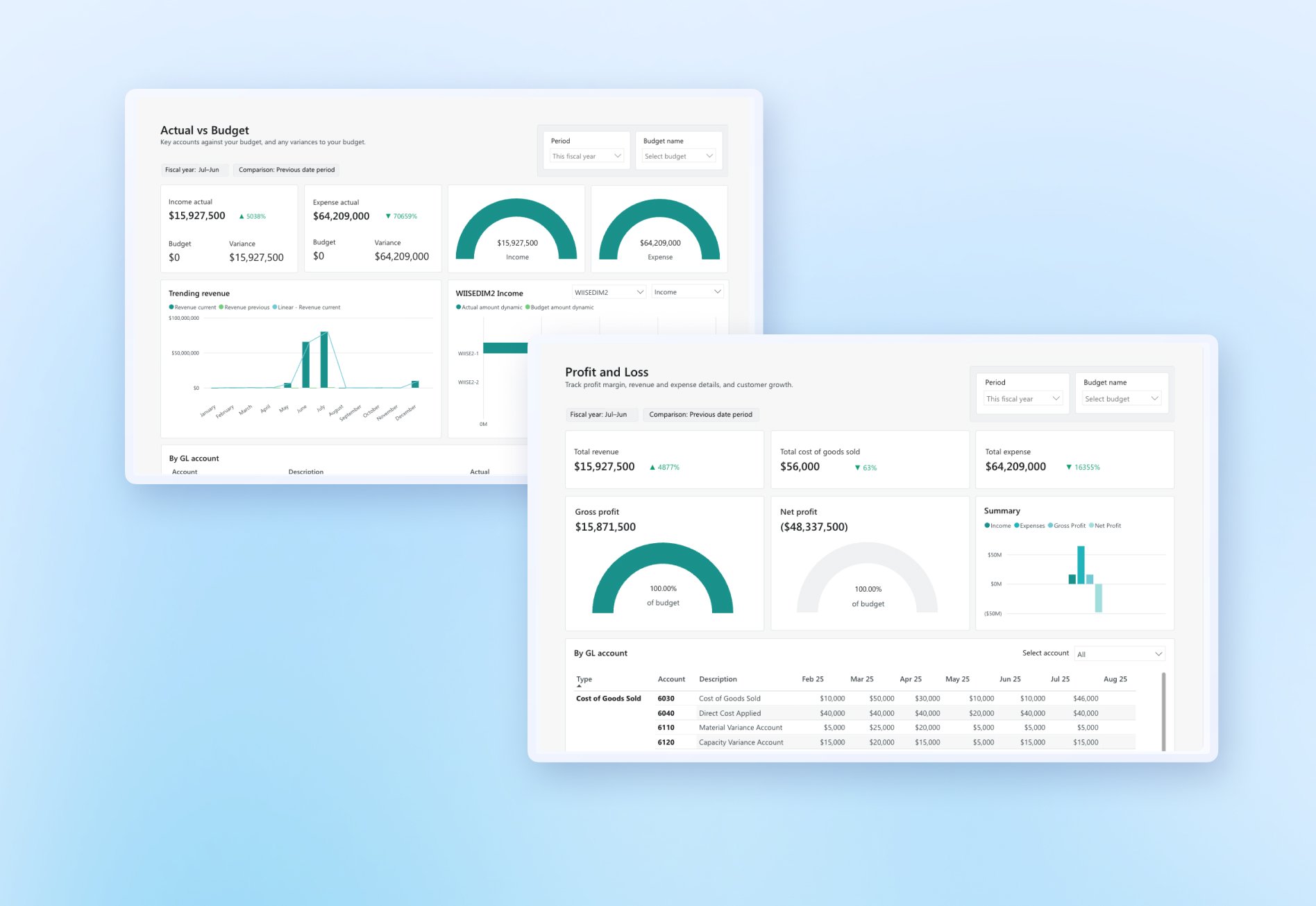
For finance leaders, the practical outcome is that labour costs become visible inside Wiise in real time, tied to jobs, projects, warehouse locations, or cost centres. Rather than discovering at month end that a project ran over on labour, finance can track those costs as work happens.
For HR and operations teams, the change is consolidation. Recruitment, onboarding, performance management, leave, and compliance are all managed in EOS, with the financial implications visible in Wiise. Managers no longer need to cross-reference multiple systems to approve a shift pattern or understand whether a roster decision is going to create a payroll problem.
What this looks like in practice
Wiise customers across manufacturing, warehousing, and logistics already understand what consolidated systems can unlock. SGESCO-MAX, a manufacturing business using Wiise, reduced fortnightly payroll processing from two full days to two hours, and saved an estimated 2,500 staff hours per year across their business with a team of 18. The efficiency gains were not from payroll alone — they came from connecting finance, inventory, manufacturing, and reporting into a single environment where data did not need to be chased down or reconciled manually.
The Wiise + EOS partnership applies the same logic to workforce management. A manufacturer running three shifts no longer needs separate tools for rostering, time capture, award interpretation, and payroll. A logistics business with 100 drivers does not need to reconcile driver scheduling with job costing after the fact — those connections happen within the same system.
Employment Hero's case studies show comparable outcomes for businesses consolidating HR and payroll. Experience Gold Coast reduced payroll processing time from three days to roughly two and a half hours for 370 employees, saving 36 hours per week and $36,000 annually. NAAJA consolidated five separate systems into one, saving $120,000 and the equivalent of 1.5 full-time roles in administration each year. Defence contractor NORSTA reduced payroll processing time by 99%, from three days to thirty minutes.
These are not edge cases. They reflect what happens consistently when workforce management is brought into a single, connected platform.
Australian payroll compliance is getting harder to manage manually
Australian payroll compliance is genuinely complex and continues to get more so. Modern award coverage, penalty rates, leave entitlements, superannuation obligations, and Fair Work reporting requirements vary by industry, employment type, and location. As businesses grow, the risk of underpayment and compliance breaches typically grows faster than headcount — because compliance is still being managed through individual process knowledge rather than embedded system controls.
EOS addresses this by including 50+ pre-built modern awards with automatic updates. When Fair Work changes an award, the update flows into the platform. Businesses are not reliant on someone in payroll remembering to check and apply the change manually.
Combined with Wiise's financial controls and reporting, compliance becomes a system function rather than a people dependency — and the risk profile at scale is materially different as a result.
Who it's designed for
Wiise serves more than 300 Australian businesses, primarily in manufacturing, warehousing and distribution, transport and logistics, professional services, and not-for-profit. These industries share a common characteristic: labour is both a major cost and a compliance-sensitive area, yet it has historically been managed outside the ERP.
The Wiise + EOS integration is suited to businesses in these industries that are either already using Wiise and want to bring workforce management into the same operating environment, or are evaluating an ERP and workforce platform together as a combined solution.
Existing Wiise customers can add EOS without replacing or rebuilding their ERP setup. The migration path is structured as an extension of current Wiise deployments — not a platform replacement — which means existing workflows remain intact while labour data becomes part of the operating core.
Frequently Asked Questions (FAQ)
What does the Wiise + Employment Hero EOS integration actually replace? For most businesses, it replaces a standalone payroll tool, a separate HR platform, rostering software, and the spreadsheets used to connect them. The goal is to consolidate those functions into a single environment integrated with Wiise ERP.
Is this just a payroll integration? No. Payroll is one component. The integration covers HR records, rostering, timesheets, leave, hiring, onboarding, award interpretation, and employee experience — all connected to Wiise's financial and operational data.
Do we need to re-platform if we are already on Wiise? No. Existing Wiise customers can add EOS without re-platforming, but considerations and configuration of awards need to be considered when migrating to EOS payroll.
What does finance actually gain? Real-time visibility into labour costs inside Wiise — tied to jobs, projects, or locations. No month-end surprises, no reconciling HR decisions after the fact, and no relying on payroll exports to understand whether labour is affecting margin.
What does HR gain? Less admin, less manual compliance checking, and a single system for recruitment, onboarding, performance, leave, and compliance — rather than maintaining records across multiple disconnected platforms.
The Wiise + Employment Hero EOS integration is available now. Existing Wiise customers can speak to the Wiise team about adding EOS, and businesses evaluating both platforms can explore the combined solution.
Learn more about Wiise + Employment Hero EOS or contact Wiise to book a demo.