




.svg)


When a system you've relied on for years gets a sunset date, your natural instinct is to find the fastest replacement and move on –– but it can also be an opportunity to pause and uncover a better way forward.
If you're running MYOB Exo Employer Services, the clock is ticking – MYOB has announced that Exo Payroll licences cannot be renewed from November 2025, and the system will fall out of compliance with Australian tax rates and thresholds by October 2026. After that date, you'll still have read-only access to historical data, but you won't be able to run a single pay run.
This isn't a patch or an inconvenience. It's a hard stop.
For many finance leaders, the instinct is to find the quickest replacement and move on. But that instinct is worth questioning. Because right now, you have a rare window — one where the business is already undergoing a significant change — to stop bolting payroll onto your ERP as an afterthought and start running it in a way that actually works for you, and your business.
Why is MYOB Exo Payroll being retired?
MYOB Exo Employer Services was built on a Microsoft FoxPro database, which dates back to the early 90s and is no longer supported by Microsoft. That means the foundation the software sits on has been obsolete for years, so it’s easy to understand why MYOB has made the call to wind it down..png?width=1600&height=500&name=Exo%20Payroll%20EOL%20(1).png)
To be clear: MYOB Exo Business (the ERP itself) has not been given an end-of-life date. But for many organisations, losing the payroll module is reason enough to ask a harder question — if you're already being forced to change, is Exo Business still the right platform for the next five years?
Weighing your options
Once you accept that a payroll migration is non-negotiable, you face a choice that's worth making deliberately. There's no shortage of directions you could go — new ERP, standalone payroll, or a mix of both — but most options tend to fall into a familiar pattern.
The fragmented stack (MYOB Acumatica + add-ons)
For many MYOB Exo customers, the most obvious upgrade path is MYOB Acumatica. It feels familiar, plus it’s newer technology and keeps you within the MYOB family, but this option comes with trade‑offs that aren’t always clear upfront.
While Acumatica does offer payroll, it has limited options for HR and workforce management. Unlike MYOB’s smaller business products, Acumatica doesn’t easily connect with popular standalone HR tools. Instead, businesses are largely pushed toward MYOB’s own add‑on solutions. That’s where things get more complicated.
Although Acumatica includes an awards engine, it doesn’t provide a built‑in, maintained library of Australian awards. To manage awards properly, businesses need to add a separate workforce management tool, and even then, teams are often responsible for setting up and maintaining complex pay rules themselves, which is a recipe for risk.
In practice, this means finance and payroll teams are still juggling multiple systems, keeping data in sync, and managing compliance changes manually. The tools may be more modern, but the day‑to‑day reality looks very familiar.
So while Acumatica represents a technology upgrade, it doesn’t necessarily simplify how your business operates. You’re either connecting separate systems or relying on add‑ons that increase manual effort — resulting in a setup that looks different on paper, but feels much the same in practice.
The integrated alternative: Wiise + EOS
Wiise is built specifically for Australian mid-market businesses, and Employment Hero's EOS (Employment Operating System) is one of Australia's most advanced HR and payroll platforms, with deep award interpretation, rostering, compliance automation, and employee experience tools built in.
They’re both best‑of‑breed platforms in their own right, but the integration means they behave like a single operating core. Labour costs, payroll, HR records, and compliance data sit inside the same ecosystem as your financials, operations, and inventory. There's no reconciliation gap, no duplicate entry and no "did payroll sync yet?" conversation on a Monday morning.
Solving the award interpretation problem
For most Australian businesses, payroll compliance isn't just about getting the numbers right. It's about knowing which numbers are right to begin with.
Modern awards are complex, frequently updated, and genuinely easy to get wrong. A missed penalty rate or an incorrect allowance isn't just a payroll error — it's a Fair Work liability. And if your payroll system requires someone to manually check and apply award updates after each Fair Work decision, you're one overlooked announcement away from a real compliance issue.
Wiise + EOS changes that equation entirely.
Employment Hero EOS includes 50+ pre-built modern awards with automatic compliance updates. When Fair Work amends an award, it flows into the platform — no manual intervention required. Entitlements, penalty rates, and allowances are calculated automatically based on each employee's classification, hours, and conditions.
For a CFO, this means your payroll compliance risk is structurally reduced, rather than something that needs to be monitored.
Beyond awards, EOS covers:
- Rostering and timesheets — connected directly to payroll calculations, allowing you to compare resource liabilities with budgets in advance
- Leave management — automated accruals and approvals
- Onboarding and offboarding — digital, compliant, and fast
- Employee self-service — via a mobile app that reduces HR admin overhead and empowers employees to self-manage their details
- Employee benefits – exclusive discounts from a variety of brands, from insurance to travel bookings and beyond
And because all of this feeds directly into Wiise, your finance team sees accurate labour cost data in real time, not at month end after a manual import.
What the numbers say
Organisations that use Employment Hero's EOS platform report significant improvements in payroll efficiency, with results including:
- 81% improvement in payroll efficiency
- 42% reduction in time spent on HR administration
- 85% of business leaders say EH makes employment management easier
And let’s not get confused – these aren't marginal gains that come from switching platforms. They're what happens when payroll, HR, and finance stop operating as separate systems that talk to each other occasionally and start running as one.
The real question for finance leaders
Every finance leader going through this transition faces a version of the same decision: do you replace what you have with something that looks similar, or do you use this moment to fix the underlying architecture?
MYOB Exo Payroll reaching end of life is a forcing function – and while it’s payroll today, there’s no telling when the ERP itself might get the same treatment. The compliance clock is real, the timeline is fixed, and you have to move. But the direction you move is entirely up to you.
A like-for-like swap into another fragmented stack — ERP here, payroll there, HR somewhere else — may be the path of least resistance, but it's also the path that leaves the same reconciliation headaches, the same compliance exposure, and the same Friday afternoon payroll stress intact.
Wiise + EOS is a different bet: that integrated, automated, and built-for-Australia is worth the same migration effort as a like-for-like swap, but with a materially better outcome on the other side.
Why move to Wiise, rather than just replace payroll?
Replacing payroll is the forcing function, but it's worth asking what you actually want from your ERP in 2026, because the answer probably looks different from when you first implemented Exo.
Wiise is designed specifically for Australian and New Zealand mid-market businesses. It's not a global platform retrofitted for local compliance — it's built from the ground up for the way businesses here actually operate. And because it runs on Microsoft Azure and integrates natively with Microsoft 365, it slots into the ecosystem most finance teams are already working in, rather than adding another silo to manage.
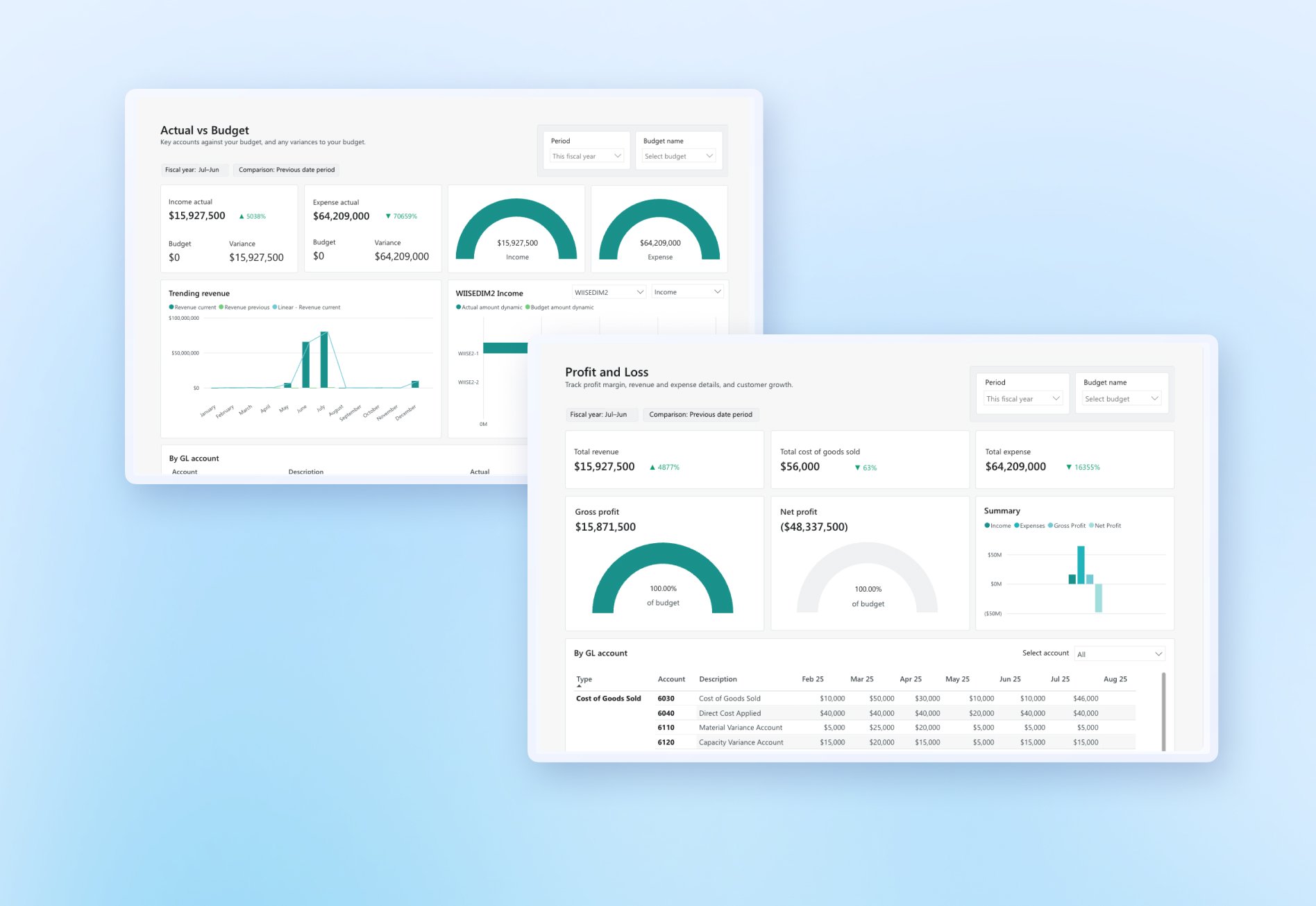
Where Exo required workarounds to get a clear picture of your business, Wiise gives your finance team real-time visibility across financials, operations, and inventory — without waiting for month-end exports or manual consolidations. The data is there when you need it, not after the fact.
It's not a reinvention. It's the same core job: managing your financials, your inventory, your operations, now done in a way that's configured to how your business really works, rather than customised at significant cost every time something changes.
Don't wait to make a move
MYOB Exo's compliance window runs until October 2026. That sounds generous, but ERP migrations take time – scoping, implementation, data migration, parallel running, training, go-live.
The businesses that navigate this best are the ones that start the conversation now: what do we actually want from our ERP and payroll stack, and is this the moment to get it right?
Wiise + EOS could be your answer — if you're ready to use this moment well.
Ready to explore the Wiise + EOS story for your business? Talk to the Wiise team and see how the transition from MYOB Exo can become an upgrade, not just a migration.
